
Food Intolerance Test · Yada Clinic Pattaya
Food Intolerance Test in Pattaya — discover which foods may be holding you back
Bloating, tiredness, breakouts or headaches that keep coming back? Our IgG food intolerance blood test screens your body's response to 232 everyday foods — and our doctor turns your results into a practical eating plan you can actually follow.
232 foods screened
Only 2 ml of blood
Results in about 5 days
Why consider testing
Could everyday food be a hidden trigger?
Acne and other recurring skin, gut and energy problems can have many causes — hormones, stress, sleep, skincare and diet. For some people, certain foods they eat every day may play a part. A food intolerance test helps you and your doctor look at that piece of the puzzle.
Digestion
Bloating, gas, stomach discomfort or irregular bowel habits.
Skin
Recurring acne, itchy or irritated skin, dull complexion.
Energy and focus
Tiredness after meals, low energy, brain fog.
Head and body
Frequent headaches, aches or a general feeling of being unwell.
Weight
Water retention or difficulty managing your weight.
These symptoms have many possible causes. The test is one tool your doctor uses together with your medical history and examination.

Understanding food intolerance
What is a delayed food intolerance?
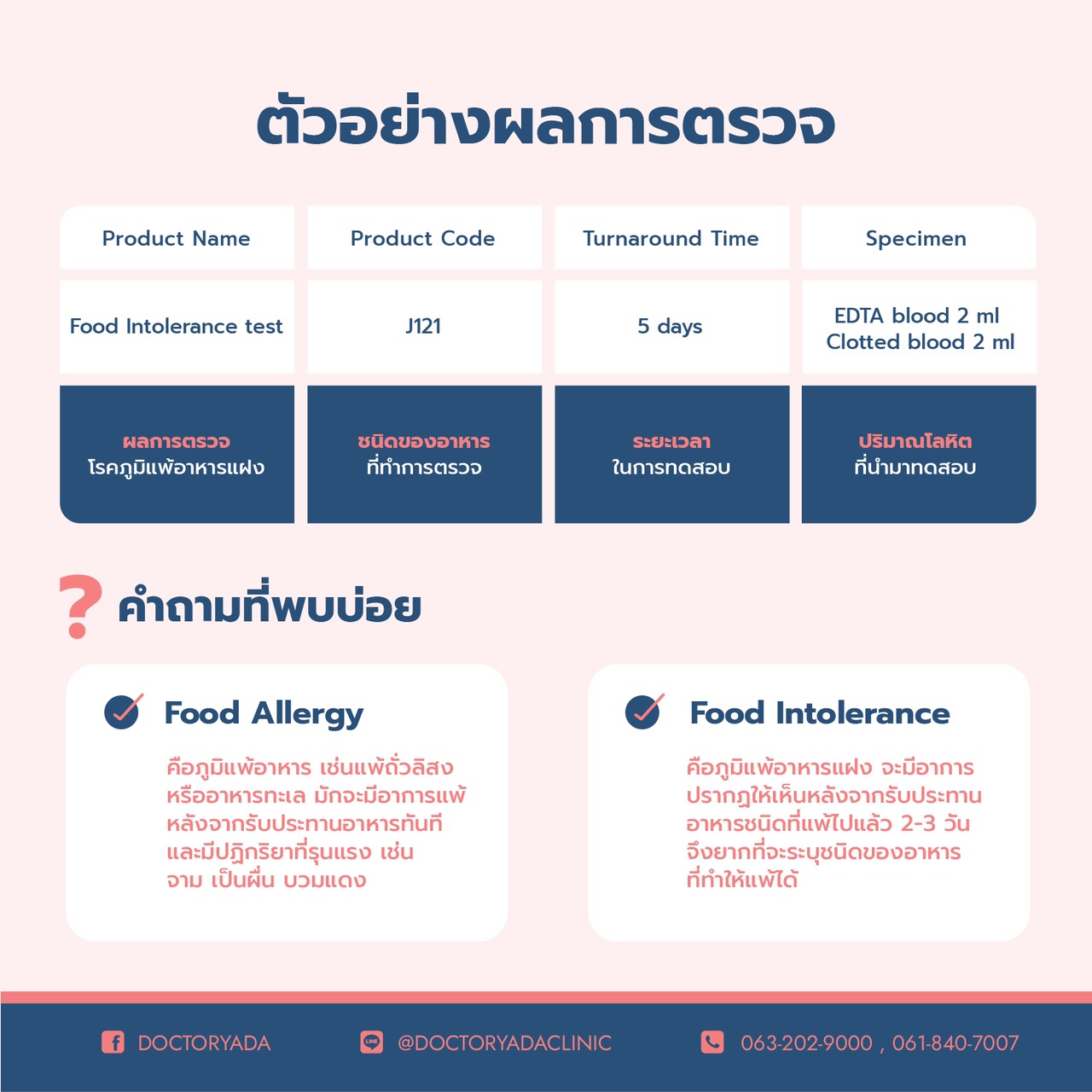
Unlike a classic food allergy, which reacts within minutes, a food intolerance (sensitivity) is usually slower and quieter — which is why it so often goes unnoticed.
Delayed reaction
Symptoms may appear hours or even days after eating, often after the same food has been eaten repeatedly — so it is hard to link them to one meal.
Builds up gradually
Reactions tend to develop slowly and accumulate over time, rather than appearing suddenly.
Hard to spot on your own
A blood test measuring food-specific IgG antibodies can highlight foods worth reviewing with your doctor, instead of guessing by trial and error.
232 foods tested
Common foods that may cause sensitivity
The panel covers a wide range of everyday foods from both Thai and Western diets. Food groups most often flagged include:
Milk and dairy
Wheat flour
Gluten
Eggs
Nuts
Seafood
Meat
Vegetables and fruit
Herbs and spices
Beer, wine and spirits
Everyone's results are different — a food that suits one person may not suit another.

How it works
Simple, doctor-led, in three steps
A small blood sample (about 2 ml) is all we need. Results are usually ready in about 5 days.
Step 1
Consultation and examination
Our doctor reviews your symptoms, medical history and eating habits to decide whether the test is right for you.
Step 2
Quick blood draw
A simple blood test of about 2 ml, sent to the laboratory to screen 232 foods.
Step 3
Results and eating plan
Your doctor explains your results in plain language and helps you build a realistic eating plan.
What you receive
Personal food report
All 232 foods sorted into 3 easy levels — Normal, Borderline and Elevated.
Pocket wallet card
A handy card listing the foods to avoid — perfect for restaurants and shopping.
Meal-planning guide
A guide book with ideas for substitutes and balanced meals while you adjust your diet.
Your results
Understanding your results
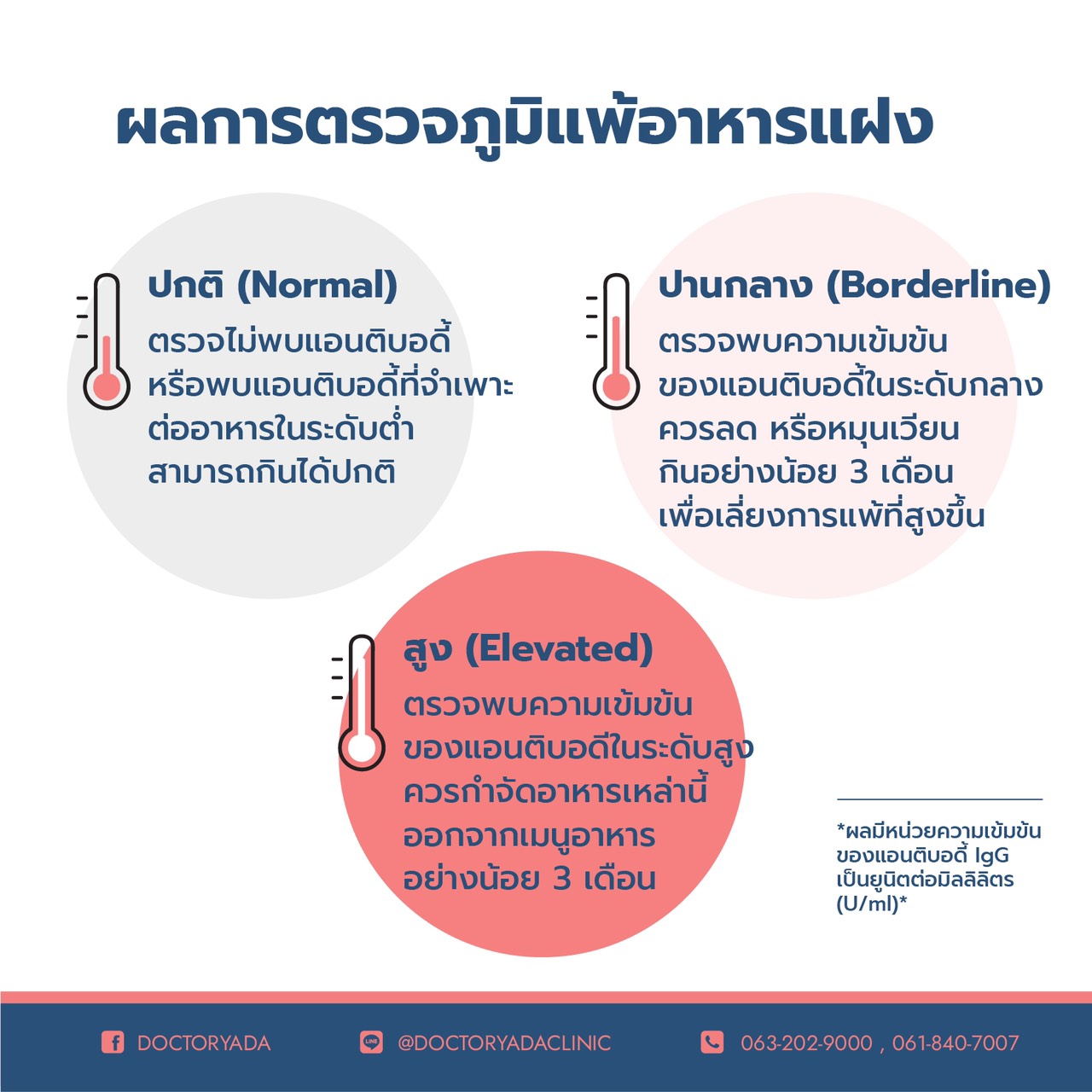
Each food is placed in one of three levels, so you know exactly what to keep, reduce or pause.
Level 1
Normal
No raised response — these foods can be enjoyed as part of a balanced diet.
Level 2
Borderline
Mild response — reduce or avoid for about 3 months, then review with your doctor.
Level 3
Elevated
Higher response — avoid for at least 3 months, then reintroduce gradually under guidance.
Most people do not need to give up foods forever — the goal is a calmer body and a varied, enjoyable diet. Individual results vary.
After your test
Your next steps to feeling better
Plan your meals
Use your report and guide book to plan weekly meals around the foods that suit you.
Choose smart substitutes
Swap flagged foods for alternatives with similar nutrition, so your diet stays balanced.
Read food labels
Processed foods often hide ingredients such as milk, egg or wheat — check labels carefully.
Follow up with your doctor
Review your progress with our doctor or a dietitian before reintroducing foods.

Why Yada Clinic
Expert care you can trust
Doctor-led from start to finish
Your results are interpreted by a board-certified internal medicine and anti-ageing physician — not just a printout.
Free consultation
Talk to our specialist doctor about your symptoms and whether the test is right for you, free of charge.
Two convenient branches
Pattaya Klang (below Maman Mansion, Soi 10) — 061-840-7007. Central Marina, 2nd floor — 063-202-9000.
15 years of experience
Trusted by local and international patients in Pattaya for aesthetic and wellness care.
FAQ
Food intolerance test — your questions answered
What is a food intolerance test?
A blood test that measures food-specific IgG antibodies to 232 everyday foods. It helps identify foods that may be linked to delayed symptoms such as bloating, skin problems, tiredness or headaches, so you and your doctor can plan targeted changes to your diet.
What is the difference between a food allergy and a food intolerance?
A food allergy (IgE) is an immune reaction that usually happens within minutes and can be serious, such as swelling or hives. A food intolerance or sensitivity is usually delayed and milder. This IgG test is not designed to diagnose a true food allergy. If you have ever had a severe reaction to food, please seek medical care and tell our doctor.
How is the test done?
After a consultation with our doctor, we take a small blood sample of about 2 ml. The sample is sent to the laboratory and screened against 232 foods.
How long until I get my results?
Results are usually ready in about 5 days. Our doctor then goes through them with you and gives you your food report, wallet card and meal-planning guide.
Do I have to stop eating these foods forever?
Usually not. Foods in the Elevated level are typically avoided for at least 3 months and Borderline foods reduced for about 3 months, then reintroduced gradually with your doctor's guidance. Individual results vary.
Is the consultation free?
Yes. You can consult our specialist doctor about your symptoms and the test free of charge. Message us on WhatsApp or LINE to book at our Pattaya Klang or Central Marina branch.
Related services
Build a complete picture of your health with our other doctor-led wellness services.
Take the first step
Listen to your body — book your free consultation
Small changes in what you eat can make a real difference to how you feel every day. Message us and our team will arrange a time with the doctor at the branch that suits you.